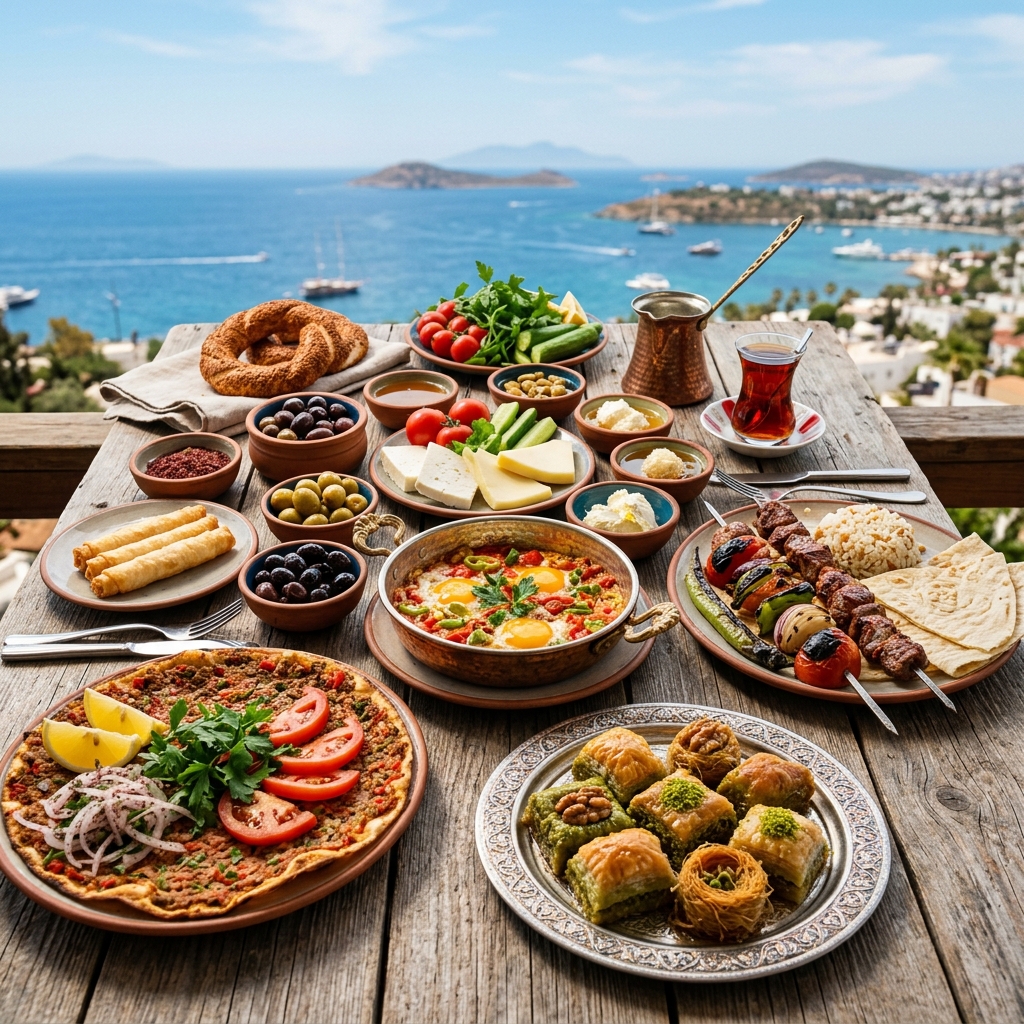
Turkish cuisine is one of the great world food traditions — alongside French and Chinese, it is sometimes called the third of the "classic" cuisines for the breadth of its repertoire and the depth of its history. The version of Turkish food you will eat in Antalya draws on Aegean olive-oil cooking from the west, Anatolian wheat-and-yogurt traditions from the centre, Mediterranean fish from the coast, and the spice-heavy southeastern style from cities like Gaziantep and Adana. This guide walks through what to order, what to skip the first time round, where to eat it in Antalya, and the practical etiquette of a long Turkish meal.
🍳 Traditional Turkish Breakfast (Serpme Kahvaltı)
A Turkish breakfast is not just a meal; it's an experience. It typically consists of dozens of small plates filled with various cheeses, olives, tomatoes, cucumbers, honey, kaymak (clotted cream), homemade jams, and freshly baked bread. Pro tip: Pair it with unlimited Turkish tea.
A proper serpme kahvaltı (literally "scattered breakfast") covers the entire table with 15 to 25 small dishes. Look for hand-rolled pastries like börek filled with cheese or spinach, the smoked-pepper paste acuka, the egg-and-pepper scramble menemen, and the regional clotted cream kaymak drizzled with mountain honey. Allow at least two hours for breakfast — this is a slow social meal, not a refuel. Best breakfast spots in Antalya are the village-style breakfast houses up in Yörükpark, a 15-minute taxi north of the city.
🥣 Antalya Piyazı
A local specialty unique to Antalya! Unlike standard bean salads, Antalya Piyazı features a rich sauce made from tahini (sesame paste), garlic, lemon juice, and vinegar. It is a Registered Geographical Indication product and pairs perfectly with grilled meatballs (köfte).
Antalya Piyazı is the city's protected Geographical Indication dish — outside of Antalya you will get a generic bean salad if you order "piyaz". The proper version layers boiled white beans with a creamy tahini-and-garlic dressing, a hard-boiled egg cut into quarters, fresh tomato, parsley and red pepper flakes, and is almost always eaten with grilled Antalya köfte (small flat meatballs) and a flat pide bread. The most famous piyazı restaurants are along Atatürk Avenue near Kalekapısı; budget around 250 TL for a piyazı + köfte + ayran lunch.
🍢 Kebabs and Mezes
From the spicy Adana Kebab to the yogurt-drenched İskender Kebab, the options are endless. Don't forget to start your meal with a selection of "mezes" (cold appetizers) like hummus, haydari, and eggplant salad. Look for "Ocakbaşı" restaurants for an authentic experience.
Turkish kebabs are far more varied than the doner version exported to Europe. The headlines: Adana (long minced lamb skewer, chilli-spiced); Urfa (the milder cousin of Adana); İskender (thinly sliced doner over bread, yogurt and tomato sauce); Şiş (cubed marinated lamb on a skewer); Beyti (minced lamb wrapped in lavash, sliced, with yogurt). An Ocakbaşı restaurant lets you sit around the grill — order one cold meze board for the table, one warm meze, two kebab plates to share, and a salad. Add ayran (salted yogurt drink) and a beer or rakı. Plan for 600–900 TL per person at a good Ocakbaşı including drinks.
🐟 Mediterranean Seafood
Antalya's position on the Mediterranean means seafood here is exceptional and properly seasonal. The classic order is grilled whole fish (levrek sea bass, çupra sea bream, or in season palamut bonito) with rocket salad, lemon, and a sharp white Anatolian wine. Mezzes to order alongside: ahtapot salatası (octopus salad with capers), karides güveç (shrimp baked in a clay pot with tomato and cheese), and haydari (thick strained yogurt with mint and dill). The best seafood streets are the Old Harbour in Kaleiçi and the Liman district on Konyaaltı; expect 800–1,500 TL per person for whole grilled fish with mezzes and wine.
🥙 Street Food & Quick Bites
Fast, cheap and excellent: simit (sesame-encrusted ring bread, 25 TL); gözleme (filled flatbread baked on a convex griddle, 100 TL); lahmacun (thin "Turkish pizza" with spiced minced meat, 80–120 TL); kumpir (overstuffed jacket potato, 180 TL); midye dolma (mussels stuffed with rice — buy from vendors on the Konyaaltı promenade for 15 TL apiece); Turkish ice cream (dondurma, made with mastic and salep, stretchy and dense — Kaleiçi vendors stage a performance with each scoop). Street food is safe to eat from any vendor with a queue of locals.
🍯 Desserts & Turkish Coffee
Satisfy your sweet tooth with pistachio baklava or "Künefe" (cheese-filled pastry soaked in syrup). Finish your meal with a strong cup of Turkish coffee, traditionally served with a piece of Turkish delight.
The signature Turkish desserts to try: pistachio baklava (the Antep-style, 40+ layers); künefe (the dessert above — served hot, eaten immediately); kazandibi (caramelised milk pudding); aşure (sweet grain-and-dried-fruit dessert traditionally eaten in autumn); fırın sütlaç (oven-baked rice pudding with a caramelised top). Drinks to finish with: traditional Türk kahvesi (Turkish coffee, served unfiltered with the grounds at the bottom — never stir, never drink the bottom); çay (black tea in tulip-shaped glass, the national drink, drunk constantly through the day); salep (a hot winter drink of orchid root and milk).
🌱 Vegetarian, Vegan & Halal
Turkish cuisine is famously vegetable-friendly. The whole zeytinyağlı ("olive-oil") category — stuffed grape leaves, artichokes, leek-and-lemon, dried bean dishes — is naturally vegan. Most mezes (hummus, haydari uses yogurt so check, eggplant salad, white-bean salad) are vegetarian. Pide (the Turkish flatbread "pizza") with cheese, spinach or mushroom is widely available. Almost all restaurants in Antalya are halal by default. Specifically labelled gluten-free options are limited but growing; ask for glutensiz. Vegan ice cream is hard to find outside Kaleiçi specialty cafés.
🍽️ Restaurant Etiquette
A Turkish meal moves in waves: mezes, salad, mains, dessert, coffee — never all at once. Allow at least two hours for dinner. Bread (ekmek) is free and refilled automatically. Sharing the table is standard; expect to keep refilling each other's glasses. Şerefe! is the all-purpose toast. Service charge of 10% is sometimes included; otherwise round up the bill by 10% for the waiter. Most restaurants accept cards but small family-run places are cash-only. Reservations are recommended on weekends for popular spots — Pearly Hotel reception can book on your behalf.